How long do wedding dress alterations take?
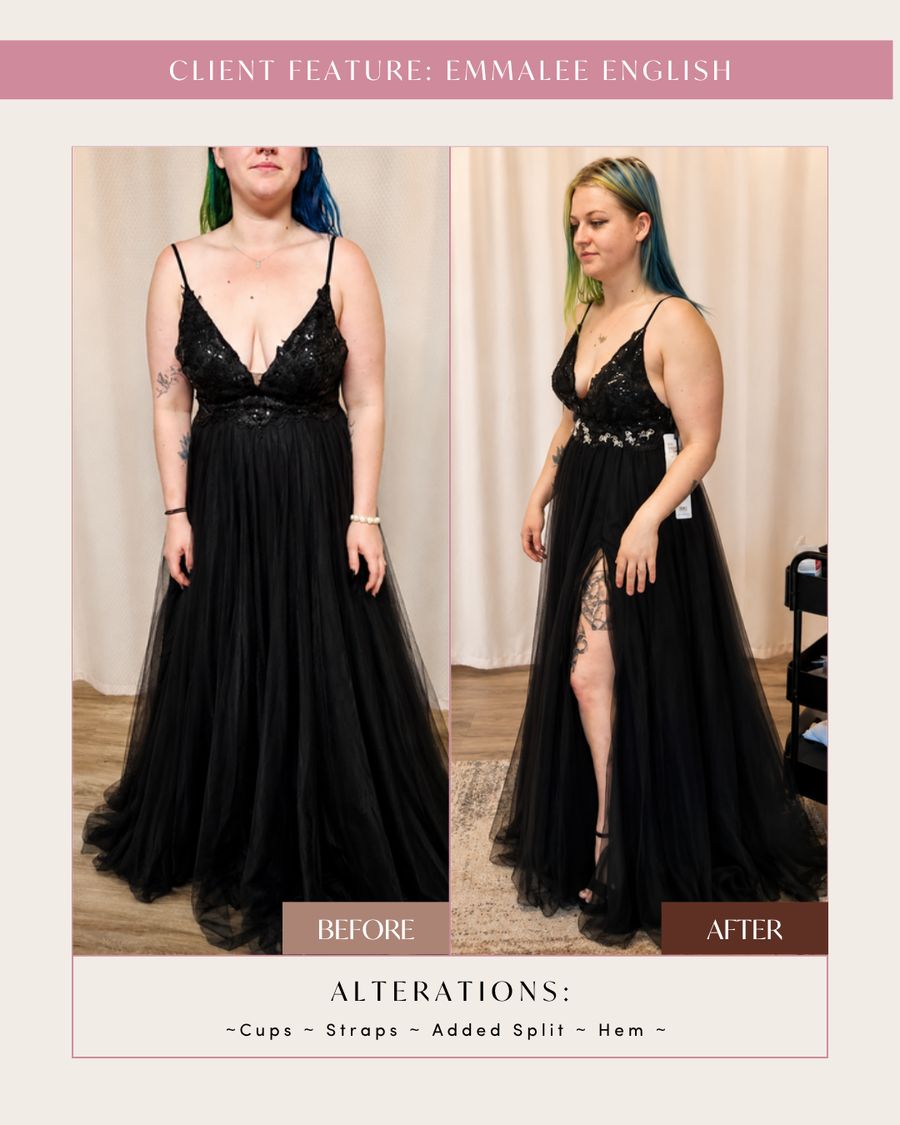
Most wedding dress alterations take six to eight weeks from the first fitting to collection, spread over two or three fittings. The actual sewing might only be a few hours, but those hours are spaced out on purpose.
Here's when to book and what happens at each fitting.
When should you start?
Book your first fitting six to eight weeks before the wedding. If your dress needs big changes, like taking it in more than a size or adding sleeves, start ten to twelve weeks out.
It's tempting to get it done early so it's ticked off the list. But bodies change in the months before a wedding, through stress or simply life. Start too early and you may need a second round of alterations closer to the day.
Start too late and you'll be limited to whichever seamstress has a gap, often with a rush fee on top. Most Australian weddings fall in April and from September to November, which means bridal seamstresses are flat out from about July to November, with another rush in March. Many seamstresses pre-book their brides, so reach out as soon as you've ordered or bought your dress, even if the fitting itself is months away.
What Australian bridal seamstresses actually say
We read the websites and reviews of the seamstresses in our directory in November 2026. Of the 291 listings, 244 had a website we could read, and around 50 of those say how long bridal work takes or when to book.
Most say to start six to eight weeks out. That was by far the most common advice. Almost everyone else landed between eight and twelve weeks, and several suggested booking your first appointment three to six months ahead so you get the dates you want.
Many say the work itself takes two to eight weeks. A few studios quote two to four weeks for the sewing on most gowns. Others say six to ten weeks across two or three fittings.
Rush work is common, but it costs more. 104 of the 244 seamstresses mention rush jobs. Where they say when a rush fee starts, it's usually once there are fewer than four or five weeks between the first fitting and the wedding.
Life happens, and good seamstresses adapt. The reviews are full of brides who needed help at short notice. One bride had a corset back added within a week so she could wear her dress at 27 weeks pregnant. Another lost 30kg and had her dress refitted in under two weeks. It can be done, but it's far less stressful with time up your sleeve.
How many fittings will you need?
Most brides have two or three fittings.
First fitting (six to eight weeks out). You try the dress on with your wedding shoes and underwear. Your seamstress pins the hem and the fit, then talks you through the price.
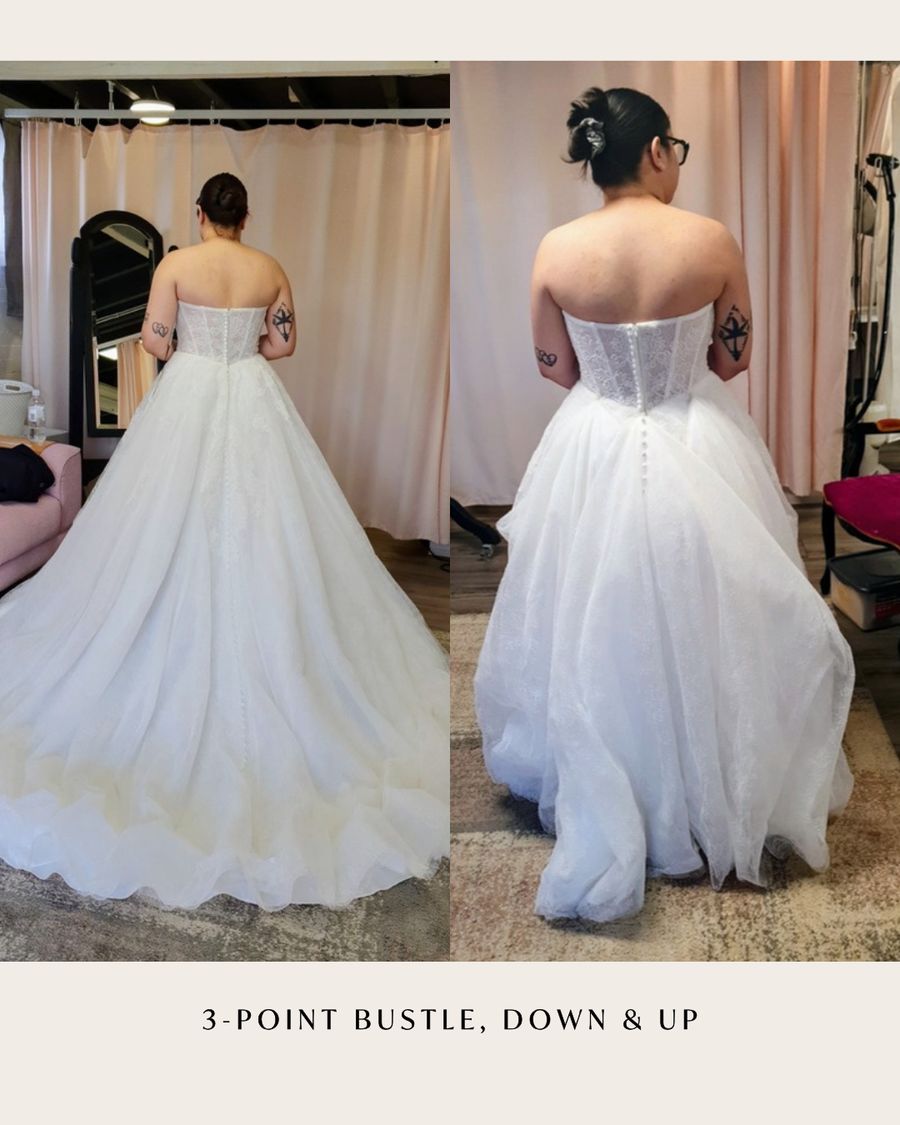
Second fitting (three to four weeks out). The main work is done. You check the fit, and small adjustments are pinned. If your bustle is being added, this is often when you'll choose where the points go.
Final fitting (one to two weeks out). Everything is finished. You try it on to make sure you can move and sit comfortably, then learn how the bustle works. Bring whoever will be doing up your bustle on the day.
Bigger overhauls are different. If the bodice is being reshaped or sleeves are being added, expect two to four extra fittings in between, spread out over a couple of months.
What if you fall pregnant or your weight changes?
It happens more often than you'd think. Tell your seamstress as soon as you can. They'll usually move the main fitting work closer to the wedding and leave room in the seams to adjust at the end. There's more on planning around a changing body in this guide to pregnancy, weight loss and fit planning.
How long does the sewing take?
Here are typical sewing times for common bridal alterations. This is time at the machine and by hand, not including fittings.
| Alteration | Usual time | Plain dress to lace or beading |
|---|---|---|
| Hem, one layer | 30 minutes | 30 minutes to 3 hours |
| Hem, two layers (dress and lining) | 1.5 hours | 45 minutes to 4 hours |
| Hem, wide skirt with a train | 2.5 to 3 hours | 2 to 6 hours |
| Taking in the side seams | 1 to 2.5 hours | 45 minutes to 6.5 hours |
| Taking in through the back zip | 1.25 hours | 45 minutes to 3 hours |
| Shortening straps | 30 minutes | 20 minutes to 1.5 hours |
| Bustle, a few points | 15 minutes | 10 to 30 minutes |
| Bustle, about 10 points | 1.25 hours | 1 to 1.75 hours |
| Replacing a zip | 1.25 hours | 1 to 1.75 hours |
| Adding a corset back | 1 hour | 1 to 1.75 hours |
| Steaming a wedding dress | 45 minutes | 30 minutes to 1 hour |
So a typical set of alterations, say a two-layer hem plus a side take-in, adds up to around two and a half hours of sewing on a plain dress. The same jobs on a dress with a lace hem and beading could take six hours or more.
Why does it take weeks if the sewing is only hours?
There are a few reasons.
Your seamstress has other brides. In peak season, a bridal studio might have twenty or more dresses on the rack. Each one is scheduled around its fittings and wedding date.
Fittings need to be spaced out. The second fitting checks the first round of work. Leaving a couple of weeks between them gives time to sew and press properly, and it gives you a chance to notice anything you'd like changed.
Lace and beading are slow. Hand-stitching lace back on after a hem, or lifting and resewing beads along a seam, takes careful work that can't be hurried.
Your body might change. A fitting two weeks before the wedding catches any last changes, so the dress fits on the day and not just a month earlier.
Can alterations be done faster?
Often, yes, but expect to pay a rush fee and be flexible with appointment times. Simple jobs like a single-layer hem or a basic bustle can sometimes be done in a week. Complicated work like reshaping a bodice or resetting a beaded lace hem is hard to rush well.
If you're short on time, tell the seamstress your wedding date when you first enquire. They'll tell you honestly what's possible.
Tips to keep your timeline on track
Book as soon as you have the dress. You can lock in your fitting dates months ahead.
Have your shoes and underwear ready by the first fitting. The hem length depends on your heel height, and the fit depends on what's underneath.
Decide on changes early. Adding sleeves or changing the neckline after the fit is done can mean redoing work.
Pick up on time. Collect your dress at least a week before the wedding, then hang it somewhere cool and out of the sun.
How much will it cost?
Price depends mostly on how long the work takes, so lace and beading add to it. Our guide to how much wedding dress alterations cost in Australia has typical prices by job.
Find a bridal seamstress near you
Every seamstress in our directory has been checked to make sure they actually do bridal work. Browse by city:
Brisbane · Sydney · Melbourne · Perth · Adelaide · Gold Coast · Sunshine Coast · Canberra · Newcastle · Hobart · Toowoomba · see all cities
Further reading: